Ted Grimsrud—June 22, 2017
[This is the seventh in a long series of posts that will work through an important new book, Greg Boyd’s Crucifixion of the Warrior God: Interpreting the Old Testament’s Violent Portraits of God in Light of the Cross (Fortress Press, 2017). The sixth post may be found here—and an index of the series here.]
Arguments against seeing the cross as central
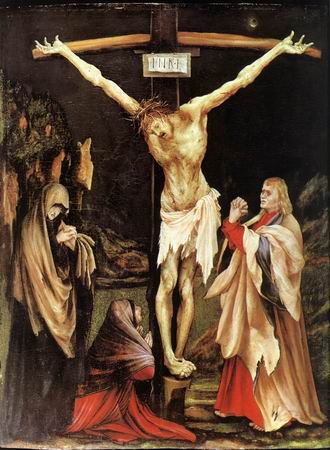
In chapter six, “Is the Centrality of the Cross Thesis Defensible?” (pages 229–77), Boyd responds to what he sees as the two main objections to his argument about the centrality of the cross both for Jesus’s mission and for the overall message of the Bible. These objections are: (1) that early Christianity did not see the cross as central as evidenced by the lack of the use of the cross as a symbol in Christian art during Christianity’s first four centuries and (2) that not very many theologians in Christian history have recognized the centrality of the cross. Since these aren’t the main questions I have about Boyd’s cross thesis, I read through this chapter fairly quickly. It did raise a few issues for me, though.
A question I do have is whether the main problem with Boyd’s thesis is with regard to how he interprets the New Testament, not whether he’s consistent with understandings of the cross in the history of Christianity. As a pacifist, I am used to having convictions that most Christians don’t have. That early Christian art or that Christian theologians over the past 2,000 years would not share Boyd’s view of the centrality of the cross is not necessarily evidence against Boyd’s argument in my mind.
My question is simply whether Boyd is correct in seeming to understand the main referent in New Testament cross language to be simply to Jesus’s death. Is it not possible that “the cross” and related images more often allude to Jesus’s life, a life that resulted in his being executed by the Romans? A significant point if we think of the cross more broadly would be that along with Boyd’s important emphasis on the cross as conveying a message of Jesus’s self-giving love, it would also convey of message of Jesus’s practice of forgiveness apart from sacrifice, of Jesus’s political radicalism that led Rome to crucify him as a rebel, and of Jesus’s continuity with the OT prophets and his embrace of a prophetic understanding of Torah. If the cross is seen as a symbol of the entirety of Jesus’s ministry, we may make more sense of Jesus’s oft repeated call to his followers to take up the cross in imitation of his life of service, resistance, and courage. As I have mentioned before, I do not mean to suggest that Boyd would necessarily disagree with my comments here about imitating Jesus’s life—but this kind of language is rarely a part of his discussion of the cross.
The NT text I am most familiar with, the book of Revelation, illustrates my point here. Revelation does not speak of the cross overtly very often, but it does commonly use the term “blood,” which I imagine most readers would understand essentially to be a synonym with cross. When Revelation mentions “blood,” we could generally substitute the term “cross.” I believe, though, that Revelation uses the image of blood not to refer to Jesus’s death per se. Rather, blood has to do with the entirety of Jesus’s ministry, with the emphasis on the life he lived. Because this life involved resistance to the political and religious structures, it led to bloody responses. And Jesus did not swerve from his commitment to a life of love and healing even in the face of those responses. So, the message Revelation gives us about Jesus’s cross is a call to discipleship. Continue reading




 Peace Theology